

In October 2026, the Headline inflation rate declined to 14.06% relative to the September 2026 headline inflation rate of 14.63%, a decrease of 0.57%.
On a month-on-month basis, the Headline inflation rate in October 2026 was 0.43%, which was 0.38% higher than the rate recorded in September 2026 (0.06%). This means that in October 2026, the rate of increase in the average price level was higher than the rate of increase in the average price level in September 2026.
HEADLINE INFLATION RATES
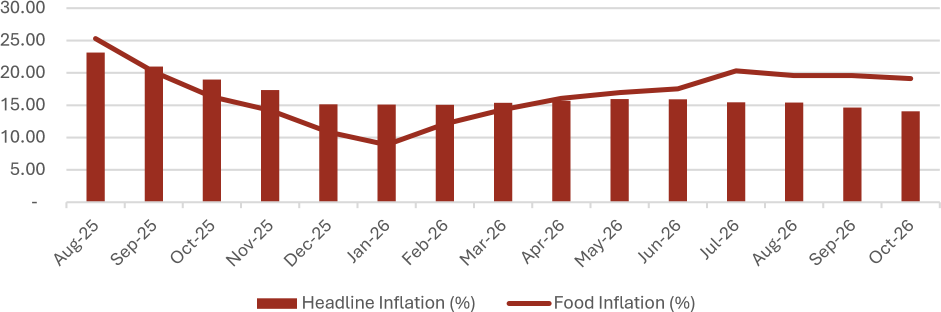
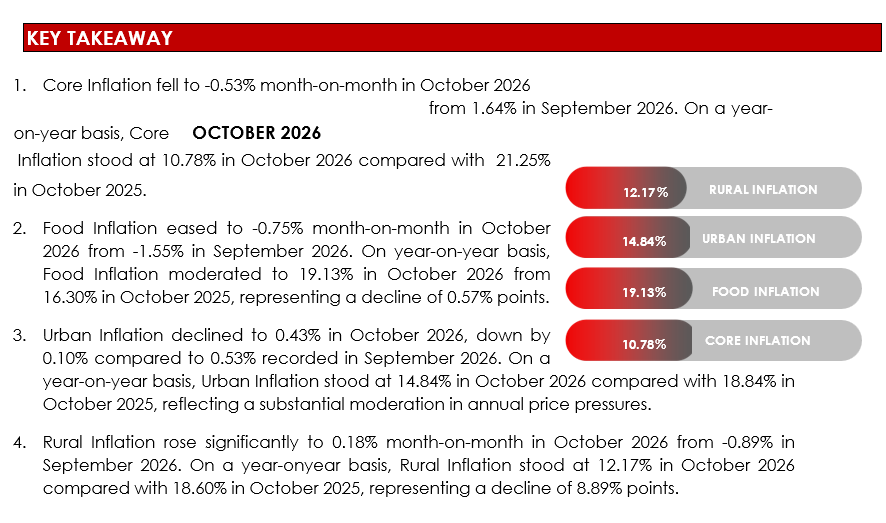
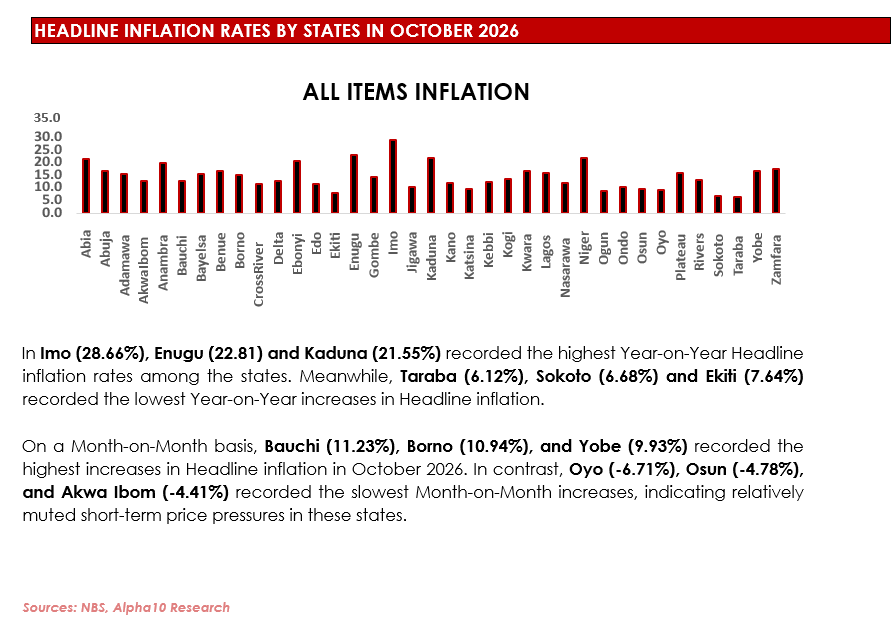

Food inflation remained a significant contributor to overall price pressures, although the annual
rate moderated to 19.13% in October 2026, compared with 19.59% in September 2026. On a
month-on-month basis, food prices declined by 0.75% in October, following a sharper decline of 1.55% in September. The October movement was attributed to changes in the average prices
of items including vegetable oil, sardines, green peas, frozen mackerel, croaker, local rice, fresh catfish, beef tripe, palm oil and millet flour. Food and Non-Alcoholic Beverages remained the largest contributor to headline inflation, accounting for 5.63% at the divisional level.
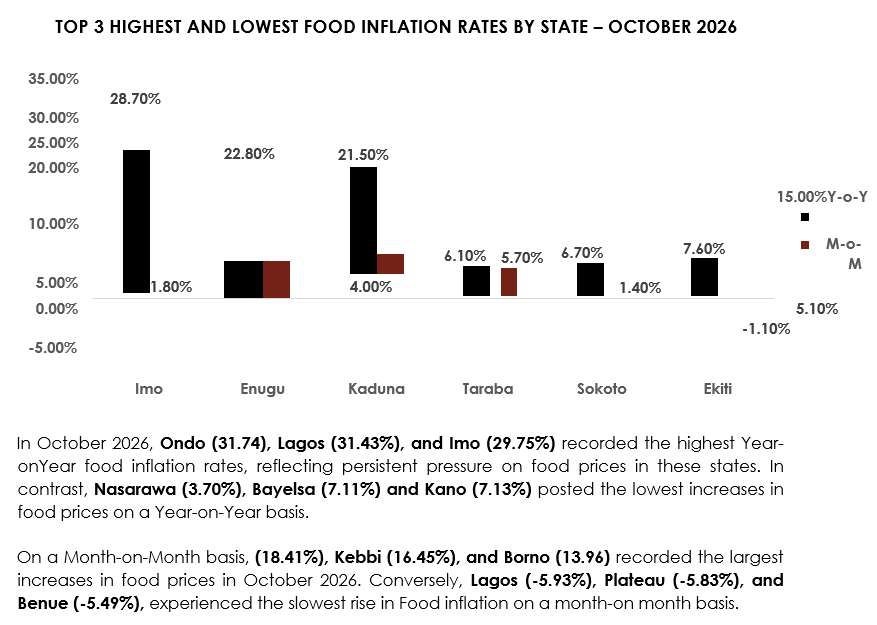
The variations in the inflation rates of States reflect the uneven impact of supply disruptions, insecurity, transportation costs and market accessibility across states. Addressing insecurity in
agricultural communities, improving transportation and storage infrastructure, reducing post-
harvest losses and strengthening inter-state food distribution channels will be critical to easing food prices and narrowing regional inflation disparities.
Meanwhile, core inflation moderation year-on-year and month-on-month suggests a broad moderation in underlying non-food price pressures, although elevated costs across services,
transportation, education and housing continue to influence household expenditure.
External developments continue to pose upside risks to Nigeria’s inflation outlook. Volatility in
global commodity prices, geopolitical tensions, supply chain disruptions and exchange rate
pressures could sustain imported inflation, particularly across food, energy and production inputs. Consequently, improvements in domestic supply conditions may be partly offset by
external cost pressures, potentially limiting the pace of disinflation in the near term.

1. Monetary Policy & Fixed-Income Repricing: The decline in headline inflation to
14.06% year-on-year from 14.63% supports expectations of gradual monetary easing. However, the increase in month-on-month inflation to 0.43% from 0.06% highlights persistent near-term price pressures, despite core inflation easing to 10.78% from
12.95%. The mixed signals favour a cautious, data-dependent CBN approach rather
than immediate aggressive easing. For fixed-income markets, sustained disinflation
could support demand for Treasury Bills and bonds as investors seek to lock in current
yields ahead of potential policy adjustments.
2. Corporate Margins & Consumer Goods Resilience: Food inflation moderated to
19.13% year-on-year, while food prices declined by 0.75% month-on-month, offering
some relief to household spending and food-related input costs. However, the slower pace of monthly price declines suggests that cost pressures remain. FMCG and agricultural-linked businesses could benefit from improved consumer affordability
and selective margin recovery in Q4, although higher energy, transportation and
distribution costs may offset these gains.
3. Macroeconomic Volatility & Uneven Cost Pressures: Despite the decline in annual headline inflation, monthly energy and transport prices rose by 1.74% and 1.86%, respectively, highlighting uneven price pressures across sectors. The near-term outlook therefore points to continued annual disinflation, but with vulnerability to renewed monthly increases. Energy costs, transport charges and food-price movements will remain key indicators for businesses and investors, particularly in assessing operating costs, pricing strategies and investment decisions.
DISCLAIMER
This publication is produced by Alpha10 Group solely for informational purposes. The views expressed in this report are those of Alpha10 Group and do not necessarily reflect sentiments of the general public. Whilst every care has been taken in preparing this document, no responsibility or liability is accepted by any member of the Group for actions taken as a result of information provided in this publication. Finally, the recipient should check this attachment for the presence of viruses. The company accepts no liability for any damage caused by any virus transmitted by this email. Alpha10 Group. 13, Mambolo Street, Zone 2, Wuse, Abuja. Phone: +234 (0) 9134444497. Visit us at www.alpha10group.com.